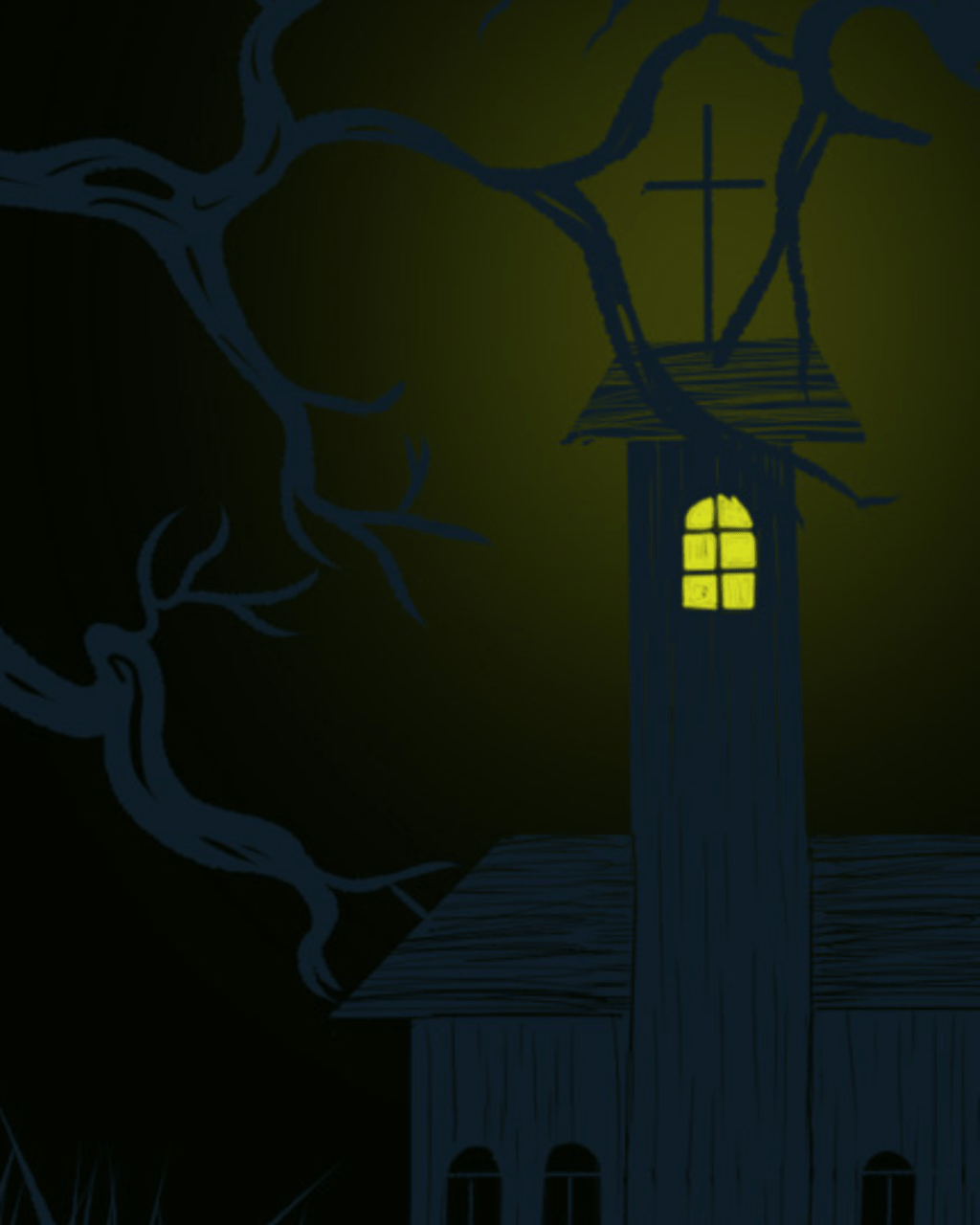
There are a lot of phrases that I should use when marketing or describing Profane Beasts to readers. When asked the dreaded question of “what is your book about” words like “religious trauma” or “deconstruction” or “cult horror” all come to mind, but every time I bristle at the terms, and it’s triggered a lot of looking inward to why I just can’t describe Profane Beasts in those efficient and effective words.
A trend in book marketing right now is to place your novel in the center of the picture and surround the book with all of the ‘tropes’ readers can expect inside. Perhaps it would be good for me to engage in the exercise, and surround Profane Beasts with terms like “suburban horror” or “cult vibes” in order to give readers an idea of what to expect, going beyond the mechanics of the plot, to the feeling I’m hoping to evoke with the book. I just can’t bring myself to do it though.
At first I thought this was just me being an artist and not wanting to be put into a box. The constant push and pull of fitting into genre conventions and telling myself that I’m adding something unique to horror tradition. But upon further reflection, I don’t think that’s the case. Of course I bristle at distilling literature down to simple marketing phrases like ‘religious trauma deconstruction with psychological thriller vibes,’ but I get the utility of these phrases. Elevator pitches exist for a reason, and it is a real skill to show passion and excitement over your work in less than one hundred words. My problem, I think, is instead with the shorthand, the limiting nature of the phrases like ‘deconstruction’ or ‘religious trauma’ when discussing what twenty years steeped in the evangelical church really was like.
In John Ganz’s excellent piece on the Iran War titled “Command-Shift-War” he discusses the seeming mindless nature of the words being used by the Trump regime as they defend their actions. The images and phrases are a barrage of cliches that invite the listener to fill in the blanks, and manufacture consent for the continuing death that reigns down in the middle east. Ganz says, “There’s a blind automism to this war; it’s a war without thought or deliberation, public or private. It’s war as autocomplete. Of course, we were gonna “do” Iran.” The autocompete nature of this regime’s senseless war mirrors the kind of new speech of the internet. Why would they need to explain the war to the public, when they can just let the ambient noise of the past decades fill in the blanks for them?” There’s no need for Colin Powell to lie to the world about WMD’s in Iraq when you can simply invoke the fear of a nuclear weapon and your audience does the rest of the work for you.
That ambient noise, autocomplete, fill in the blank nature is what I feel when I reach for terms like “Deconstruction” or “Religious Trauma” to describe Profane Beasts. I can almost feel the listener filling in the blanks with whatever short form video reels have used those terms before even opening the first page of the book. Both terms are flexible enough to fit a wide range of beliefs, from complete rejection of the church to a simple change of denominations. Both can shapeshift and morph into whatever the listener wants all based around a sort of amorphous ‘wrong’ way of doing church that angers no one and comforts everyone.
This isn’t about me being upset that my work is getting interpreted in different ways. In fact, I love the different interpretations that people have come to me about Profane Beasts. From some who view it as a cosmic horror tale to others who aren’t even certain if the Seven Eyed Tree is a real entity in the text. I often say that I have my version of what happened in the story, but am more than willing to let my authorial intent die the moment it is read and interpreted by others. What I care about is that the story is true to my experience, and that it can find some sort of connection with others who have similar experiences, or even a window into some of the dark places of self doubt, anxiety, or terror, and how religious extremism hardly ever helps in dealing with those problems. I do not care if there is disagreement on the events of the story, as long as that core of suffering, self hatred, indecision, and panic remains and feels real.
That is the bone I have to pick with taking twenty years of singing songs that told me there was “nothing good in me” or the real emotional and mental anguish of the alter call or the encouraging of cyclical thoughts that I was bad, dirty, or wrong and simply paring it down to a phrase like “religious trauma.” While I would prefer people to love the book I have produced, at the heart of things I don’t really care if it is loved, hated, or ignored. What I care about is whether or not I have communicated the truth of how being in that place felt, and how it feels to wonder if the rot has grown worse, or if it was always there and I just couldn’t see it. I have to believe that Profane Beasts can provide some window, some truth, on how that feels. When those experiences, those scars are reduced to autocomplete, to a “bad habit of language” as Orwell says, I must reject them.
Towards the end of Ganz’s article, he quotes a particularly bleak quote from Kierkegaard’s work The Present Age where Kierkegaard states “…there will no longer be someone who speaks, but an objective reflection will gradually deposit a kind of atmosphere, an abstract noise that will render human speech superfluous.” That abstract noise is what I hear when I try to describe Profane Beasts in those terms, and it is an anathema to me. I write, I have to believe that words can communicate something to a reader, some sort of truth or experience or something. It’s hard enough as is, but that truth gets more muddled when trying to fish it out of an abstract sludge of “deconstruction/religious trauma/swamp vibes.” Kierkegaard would laugh at me, desperately trying to assert that I am the speaker, that my experience matters and can be communicated through the text. Just another lost soul screaming atop a mountain in the middle of a storm, where my words are as pointless as the wind.
I reject that, instead I choose to think my work matters, that I have an experience worth sharing, and that Profane Beasts can communicate some truths instead of just noise. So that is why I cannot reach for those terms, that autocomplete that surrounds us. However futile, however frustrating that seems, I think it matters that my work encounters others without simply being an ambient din that squats in the atmosphere. Because for me, it never was an abstract noise, but a reality that did not just have me in its grasp when I was young, but still walks with me today.

